Beach met Joyce in July 1920, a few days after he had moved from Trieste to Paris. News of a trial in New York was to change Beach’s role from that of a personal friend of Joyce’s to a far more crucial one.
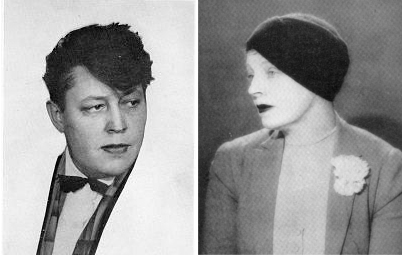
Margaret Anderson and Jane Heap, the editors of the American avant-garde magazine The Little Review, did not hesitate when foreign editor Ezra Pound suggested they serialize Ulysses. “Let us print it if it’s the last effort of our lives!”
Ulysses Confiscated
Between March 1918 and August 1920, they published the first 13 chapters, all written in Zurich. Despite the editors’ precautionary excisions from Joyce’s text, three issues were confiscated because the so-called Comstock Act prohibited sending by U.S. mail publications deemed “obscene, lascivious, filthy
or vile”.
After the publication of the third part of the “Nausicaa” episode, John Sumner, Secretary of the New York Society for the Suppression of Vice, filed an official complaint against the editors.
Ulysses in Court
The trial was held on 21 February 1921. Ten passages were the basis for the charges. The plaintiff focused especially on Bloom masturbating as he watches Gerty
MacDowell leaning back and uncovering her legs on Sandymount Strand.
When the prosecution had specific obscene passages read aloud, one of the judges looked at Anderson “with a protective paternity” and forbade reading them in her hearing, as she recalls in her memoirs. The defense attorney John Quinn smiled and retorted that Anderson was the publisher. “I am sure she did not know the significance of what she was publishing”, replied the judge.
A Book That Cannot Be Published?
Anderson and Heap were found guilty and fined $100. The serial publication was stopped immediately.
As a result, Joyce’s American publisher Benjamin Huebsch declined to publish the novel without substantial changes to the text. Joyce, however, vigorously opposed any such compromise.
A publication in the English-speaking world was now well-nigh impossible.
< Previous|Back to Overview|Next >