
“Undeterred by lack of capital, experience and all the other requisites of a publisher I went right ahead with Ulysses.”
So wrote Sylvia Beach, recalling in her memoirs the moment Joyce came to her bookshop with the news that the New York verdict had imposed a ban on his novel. In this version of the story, she spontaneously asked the completely dispirited author whether he would let Shakespeare and Company publish his Ulysses.
Devotion to the Cause
Beach almost unreservedly devoted herself to the publication – and to Joyce. She spent her nights reading proofs and her days dealing with the printer, acting as adviser and facilitator.
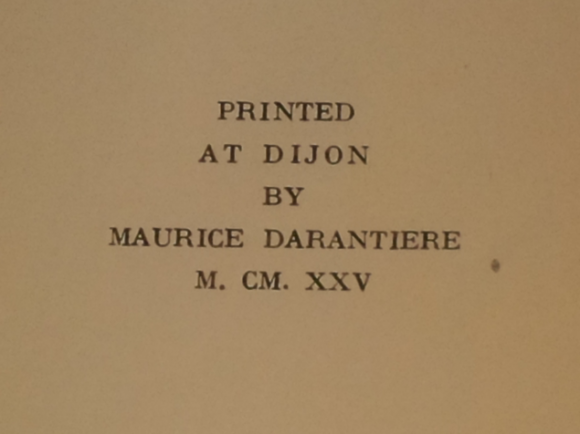
Beach’s printer in Dijon, Maurice Darantiere, was experienced in working with the French literary avant-garde. Ulysses, his first English-language book, was to be his most exacting project.
Joyce’s handwriting proved a major challenge to the type setters, and the only employee who knew English added his own distortions to the text by correcting what he deemed to be Joyce’s errors.
Insatiable Joyce
Joyce was also working incessantly on the proofs that had been sent to him only for minor corrections. Instead, he restored all the excisions made for the Little Review version and kept revising and expanding the text.
Darantiere warned Beach of the extra costs caused by Joyce’s practice, suggesting she might want to curb his appetite for expanding Ulysses. Beach, however, would hear none of it, despite her own financial constraints. In the end, roughly a third of the novel was written on the 5,000 galley and page proofs.
Without Sylvia Beach’s uncompromising generosity, Ulysses would not be the book it is, but a far less experimental and groundbreaking novel.
Text by Ursula Zeller