
In the years to come, Beach gradually transformed her recollections, smoothing over past conflicts. Most notably, the version she chose to publish in her memoirs makes light of the painful rift with Joyce over her lucrative American publishing rights.
One Story, Many Versions
Beach was working on her memoirs for two decades. She started in 1937, a time of crisis: Adrienne Monnier had left her for the young photographer Gisèle Freund. Moreover, Joyce’s betrayal over the American edition was still fresh; the early drafts express her bitter anger against him.
The different versions of Beach’s famed offer to publish Ulysses are emblematic of her changing stance towards the story. In the earliest drafts, it is Joyce who makes the suggestion, which she accepts with varying degrees of hesitancy and enthusiasm, worrying about her lack of funds. In later versions, Beach, far from feeling pressured, takes the initiative, and “Joyce accepted – what else could he have done?”
Towards the end of the writing process, Beach decided to add some pathos:
“And here in my little bookshop sat James Joyce, sighing deeply. It occurred to me that something might be done, and I asked: ‘Would you let Shakespeare and Company have the honor of bringing out your Ulysses?’ He accepted my offer immediately and joyfully. (…) We parted, both of us, I think, very much moved.”
A Conflict Reimagined
Even their major conflict is glossed over in the published story. Beach initially wrote: “I saw him in another light after this, not only as a very great writer, but also as a great businessman, hard as nails. (…) He’d grind his fellow beings’ bones to make his bread.”
The book version reads: “Joyce’s labors and sacrifices far exceeded his earning – a sad thing with genius.” She does mention her exasperation, but continues: “(A)fter all, the books were Joyce’s. A baby belongs to its mother, not to the midwife, doesn’t it?”
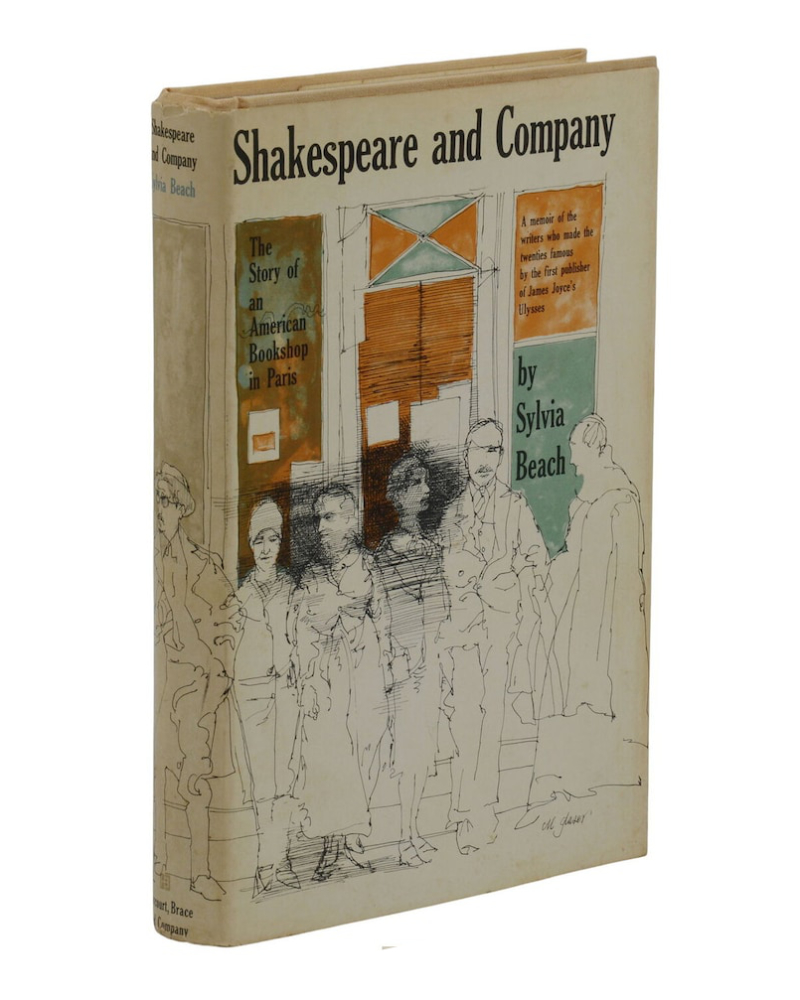
Beach eventually suppressed all harsh passages – as if writing them had already served the purpose of exorcising her outrage. Arguably, she thereby reclaimed the success story as her own, presenting herself, not as the hapless female victim of a ruthless male genius, but as the active and determined woman she was.
Text by Ursula Zeller